Rating:⭐️⭐️⭐️⭐️
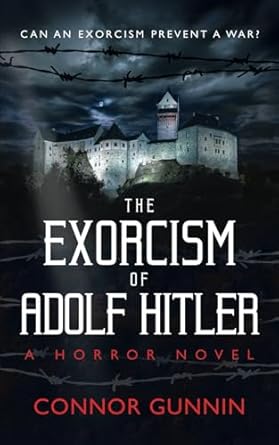
Connor Gunnin’s The Exorcism of Adolf Hitler is an ambitious and audacious exploration of evil, morality, and redemption set during the tumultuous days leading up to World War II. Blurring the lines between historical fiction and supernatural horror, the novel imagines a scenario where Adolf Hitler is possessed by a demonic force, and a small group of individuals embarks on a perilous journey to exorcise him. Anchored in meticulous research and a deep understanding of history, Gunnin’s narrative boldly tackles complex themes of responsibility, free will, and the nature of evil.
The story centers on Werner Stengel, a former Catholic priest turned high-ranking Nazi official, who risks everything to orchestrate Hitler’s capture and subsequent exorcism. As the narrative unfolds, readers are introduced to an eclectic cast of characters, including the enigmatic Brother Jürgen and the determined Bruna Stengel, Werner’s daughter. The tension is palpable as the group navigates both the physical dangers of the Nazi regime and the spiritual warfare within Hitler himself. Gunnin’s portrayal of Hitler as an inherently evil human, thus allowing him to become a vessel of malevolence leaves room for thought-provoking debates about personal accountability and the origins of evil. However, the narrative also emphasizes that the demon Astaroth did not so much as create Hitler’s antisemitism or warmongering tendencies but rather exploited traits that already existed within him. For example, Stengel realizes that “the demons weren’t the source of his evil,” and that Hitler was chosen because he was already a warmonger and anti-Semite. This distinction effectively balances the delicate premise by ensuring that the possession narrative does not completely absolve Hitler of responsibility for his actions, including the war and the Holocaust. Instead, the story suggests that Hitler’s inner darkness was amplified but not created by external forces, keeping the accountability firmly with him as an individual. The book navigates this theme thoughtfully while maintaining its fictional exploration of evil.
Readers will appreciate the novel’s richly atmospheric settings, from the foreboding Falkenhayn Castle to the shadowy depths of the Black Forest. Gunnin’s prose is vivid and immersive, capturing both the grandeur and horror of the era. The pacing is deliberate, building suspense with each chapter as the stakes grow higher. While some may find the philosophical discussions and theological underpinnings dense at times, these elements enhance the story’s depth and gravitas.
The Exorcism of Adolf Hitler will appeal to fans of speculative historical fiction and readers drawn to morally complex narratives. Those who enjoy works like Robert Harris’s Fatherland or Guillermo del Toro’s dark, fantastical tales will find Gunnin’s novel equally compelling. With its daring premise and thought-provoking execution, this book is a chilling and unforgettable journey into the heart of darkness.

