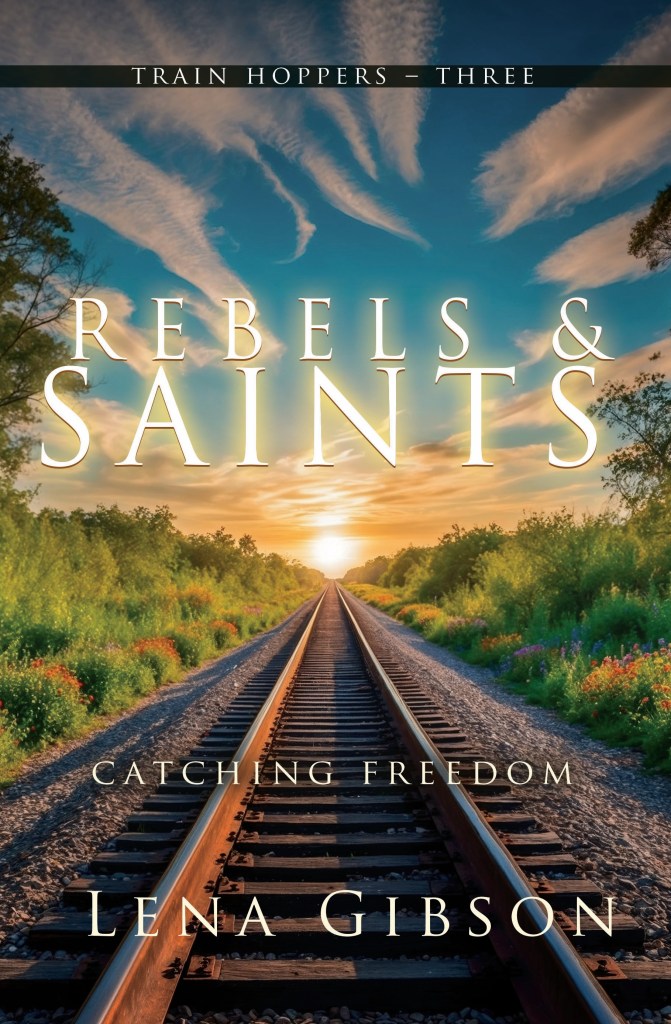
Gripping Dystopian Adventure Rich with Action and Emotional Depth
Rating: ⭐️⭐️⭐️⭐️⭐️
Lena Gibson’s Rebels and Saints, the compelling conclusion of the Train Hopper trilogy, vividly encapsulates themes of survival, resistance, and human resilience within a richly imagined dystopian future. Set against a backdrop of an oppressive corporate regime known as GreenCorps, the novel intricately weaves multiple narratives, centering primarily around Elsa, a courageous young woman determined to dismantle corporate tyranny, and a host of memorable supporting characters, each confronting their personal battles.
The narrative picks up with Elsa struggling with injury and frustration, sidelined in Portland while awaiting critical resources for the resistance. Concurrently, other storylines unfold: Tatsuda and Ginger bravely journey into dangerous territory in Southern California to rescue Elsa’s sister and nieces; Janna, betrayed by her brother into a grim life in Texas, fights for survival and hope; Clark Dawson grapples with loss and neutrality among the Saints community; and Mason and Caitlyn risk everything as key figures in the resistance movement. These story arcs intertwine effectively, creating tension, empathy, and a powerful sense of unity against oppression.
Gibson’s storytelling is captivating, blending intense action sequences with emotionally charged character development. Her narrative style is clear, gripping, and accessible, keeping readers emotionally invested through realistic dialogue and authentic relationships. The pacing is consistently engaging, balancing moments of high drama and quiet introspection with precision, ensuring readers remain deeply immersed in the unfolding drama.
Characterization is particularly impressive, with Elsa emerging as a compelling heroine—resourceful, determined, and emotionally complex. Supporting characters, including Tatsuda, Ginger, and Janna, are equally well-realized, their growth and struggles adding considerable depth to the narrative. Gibson skillfully navigates the emotional complexities of betrayal, familial bonds, and personal redemption, enriching the novel’s overall impact.
Thematically, Gibson addresses the nuances of power, control, rebellion, and personal agency, effectively utilizing symbolic elements, such as train hopping, as a metaphor for freedom and resistance. While the narrative successfully balances numerous subplots, a minor suggestion for improvement might include providing additional context for readers who join the series at this concluding volume, easing their integration into the complex backstories.
The ideal audience for Rebels and Saints includes readers who appreciate thoughtful dystopian fiction with strong character-driven narratives and intense emotional stakes. Fans of series like “The Hunger Games” or “Divergent,” or readers who enjoy exploring themes of resistance and personal courage in bleak futures, will find this finale particularly satisfying.
Overall, Rebels and Saints delivers a powerful, emotionally charged conclusion that masterfully ties together its multiple storylines. Gibson’s vivid world-building and dynamic characters offer a rewarding reading experience that will resonate deeply with dystopian fiction enthusiasts.

