Rating: ⭐️⭐️⭐️⭐️⭐️
Headline: A Vividly Rendered Dystopian Journey of Memory, Identity, and Resistance
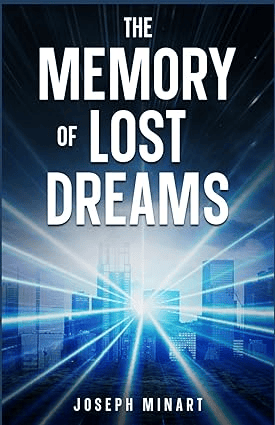
Joseph Minart’s The Memory of Lost Dreams is a striking two-part dystopian epic that blends philosophical reflection, political commentary, and futuristic world-building into a narrative brimming with urgency and heart. Set in a fractured future world where remnants of a fallen society whisper secrets of the past, the story follows eighteen-year-old Reylan Hawke—a tribal outcast thrust into a journey far beyond his understanding after uncovering ancient ruins beneath his homeland.
The novel opens with an evocative prologue that draws readers into the cavernous underworld of Imperia, a collapsed metropolis filled with forgotten technologies and haunting reminders of a bygone civilization. Reylan, fleeing unjust persecution by his village’s chief, stumbles upon REQUIEM—a mysterious machine that transports him into a fully operational version of the very city buried beneath the earth. What begins as a quest for truth becomes a plunge into layers of memory, history, and political oppression.
Minart’s prose is cinematic, layered with lush visual details and emotional undertones. His ability to oscillate between dystopian decay and gleaming futurism is particularly impressive. The world he builds is one in which America has rebranded itself as the “People’s Republic of America,” an empire run by a ruthless Order Government. In this future, Europe has fallen, the moon is colonized, and identity is tightly controlled. Reylan—an unregistered outsider—is swept into a world of enforced conformity, brutal military control, and whispered resistance. “You don’t know anything about them?” an old drunkard asks Reylan, baffled by his ignorance of the government’s reach. It’s one of many moments where Minart uses dialogue to underscore the menace of omnipresent power.
The novel’s structure is ambitious. Part One establishes Reylan’s discovery of the ruins and the REQUIEM machine, while Part Two expands the political landscape, introducing figures like the masked revolutionary Aurelen, who steals the spotlight with his daring acts of rebellion. The serialized chapters mirror episodic television, each contributing to the world’s texture while moving Reylan—and the reader—deeper into questions of who controls history and who survives it.
Reylan is a compelling protagonist—curious, reflective, and driven not by revenge but by the pursuit of understanding. His friendship with the late Auron Theonord is heartbreaking and deeply symbolic, embodying the cost of knowledge and the price of truth. The library scene, in which Reylan mourns his friend’s skeleton while exploring the origins of a forgotten civilization, is among the book’s most emotionally resonant.
Though lengthy, the pacing is sustained by high-stakes encounters, from violent raids by the City Enforcers to chilling propaganda broadcasts. Scenes involving Sergeant Blake’s authoritarian brutality, the militarized arrests of immigrants, and Reylan’s confused integration into this harsh world all serve to critique unchecked power and surveillance. The tone at times echoes Orwell and Bradbury, yet Minart’s voice remains his own—earnest, layered, and richly visual.
Fans of speculative fiction, political dystopias, and coming-of-age tales will find much to savor in The Memory of Lost Dreams. Readers drawn to the existential depth of The Giver, the world-shaping dynamics of The Hunger Games, or the layered philosophical reflections of Cloud Atlas will find similar satisfaction here.
Minart’s novel isn’t just about lost dreams—it’s about remembering them, reclaiming them, and daring to reshape them. And in a world where forgetting is enforced, Reylan’s refusal to surrender memory may be the most revolutionary act of all.
A must-read for fans of dystopian fiction that values world-building and deep questions of identity, power, and legacy.
Discover more from A Look Inside X LitVerse
Subscribe to get the latest posts sent to your email.

