Rating: ⭐️⭐️⭐️⭐️⭐️
A Brilliant, Braided Tapestry of Holocaust Survival, Inherited Trauma, and American Reckoning
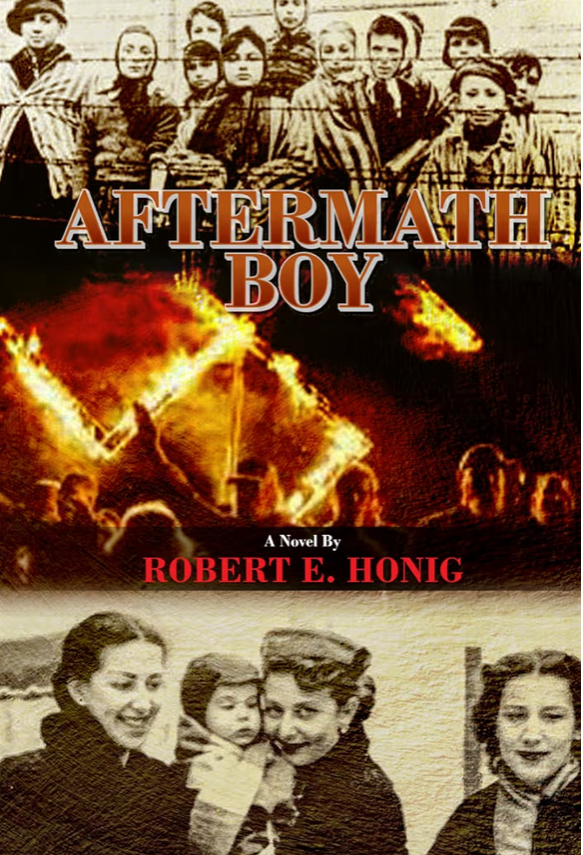
Robert Honig’s Aftermath Boy is a searing, multi-generational novel that intertwines the horrors of Holocaust survival with the disillusionment of postwar American life, all seen through the dual lenses of Rozsa—a formidable Hungarian Jewish survivor—and her son Billy, a self-described “child of the Holocaust” navigating the sociopolitical currents of the late 20th and early 21st centuries. From Rozsa’s death marches and concentration camp horrors to Billy’s present-day disillusionment with American democracy, Honig deftly threads history, memory, and generational trauma into a powerful and original narrative.
Told through alternating perspectives and timelines, the novel opens with a poetic, introspective prologue from Billy in 1950s America, segueing to Rozsa’s first-person accounts of her forced marches, Dachau, and unrelenting postwar struggles. From there, the story unfolds in overlapping narratives—Billy’s present-day legal and existential troubles (including a surreal FBI raid), Rozsa’s coming of age in pre-war Budapest, and the unfolding collapse of civility under fascism. Honig seamlessly fuses these stories with lyrical prose, black humor, and a deep philosophical undercurrent.
Rozsa’s chapters are a highlight—vivid, immersive, and historically grounded without ever feeling didactic. Her voice is steely, pragmatic, and maternal, carrying readers through unimaginable loss, betrayal, and perseverance. Her relationship with her sisters Lili and Rivka, and her strained dynamic with her father Moritz, offer a rich and emotionally layered portrait of familial responsibility during wartime. Billy’s chapters, by contrast, explore post-war identity, disillusionment, and survivor’s guilt in America. His adult struggles—marital tension, loss of direction, a surreal and deeply symbolic FBI raid under the Patriot Act—show how trauma is inherited, not just remembered.
The narrative structure is ambitious and complex, but Honig controls it with mastery. Key themes include Jewish identity, authoritarianism, collective memory, and the moral ambiguity of survival. There’s a particular brilliance in how the personal and political mirror each other across time. Billy’s battles with bureaucracy and paranoia in 2025 eerily echo Rozsa’s experiences with fascist rule, underscoring how history doesn’t just repeat—it mutates.
The tone shifts fluidly from mournful to satirical, with moments of absurdity that serve to amplify, not undercut, the emotional weight. Pacing is deliberate yet gripping; even historical digressions carry narrative weight. The prose is literary and evocative, filled with philosophical reflections and sharp cultural observations, yet grounded by human experience.
Readers who appreciated Maus by Art Spiegelman or Everything Is Illuminated by Jonathan Safran Foer will find kindred DNA here. Fans of intergenerational memoir-fiction hybrids, such as Julie Orringer’s The Invisible Bridge or Sarah Blake’s The Postmistress, will also be deeply moved.
Aftermath Boy is not just another Holocaust story—it is a bold, ambitious novel about remembering, reckoning, and resisting. With its emotional depth, historical clarity, and political relevance, Robert Honig has delivered a book that feels both urgent and timeless. It’s a story of inherited trauma, unbreakable love, and the eternal tension between past and present. This novel will stay with you long after the final page—haunting, illuminating, and fiercely alive.

