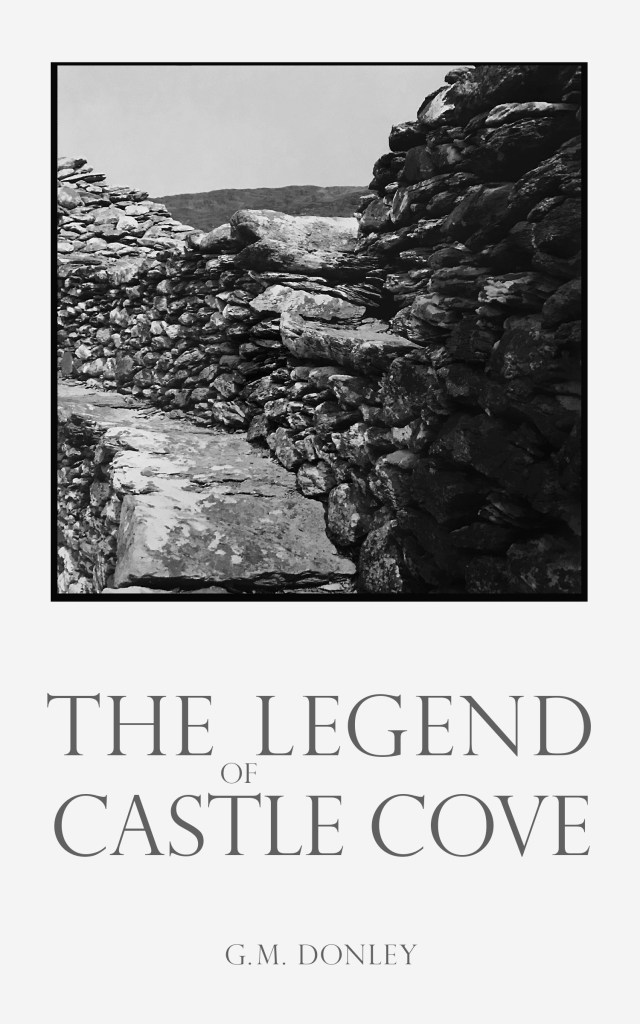
The Legend of Castle Cove by GM Donley
⭐️⭐️⭐️⭐️
GM Donley’s The Legend of Castle Cove is a thoughtful work of contemporary literary fiction that blends elements of magical realism, introspective storytelling, and a strong sense of place. The novel opens with a moment of loss that grounds the story in something deeply personal. Bret Sheehan travels to Ireland following the death of his uncle, carrying a set of ashes and a loosely defined promise tied to a place called Castle Cove. From the beginning, Donley establishes a layered narrative voice—balancing Bret’s perspective with an observing presence that quietly shapes the story—setting the tone for a character-driven journey centered on reflection, identity, and transformation.
As Bret sorts through his uncle’s belongings, small discoveries begin to shape the narrative. A photograph, a handwritten phrase—“Castle Cove”—and scattered memories create a subtle but compelling pull forward. What begins as a simple obligation gradually unfolds into a deeper personal journey. The story transitions naturally from grief and responsibility into travel, as Bret decides to journey to Ireland to fulfill his uncle’s wishes, opening the door to both physical exploration and internal change.
Once in Ireland, The Legend of Castle Cove offers readers a vivid portrayal of Dublin and the rural landscapes of County Kerry. Donley’s descriptive writing captures the atmosphere without overwhelming the reader, allowing the setting to feel lived-in and authentic. Along the way, Bret encounters a small but impactful cast of characters, including Rosko, whose storytelling and shifting truths introduce one of the novel’s central themes—the tension between authenticity and performance. Conversations throughout the book move smoothly between folklore, philosophy, and lived experience, reinforcing the novel’s reflective tone.
As Bret travels deeper into the countryside, the narrative takes on a more contemplative journey. Moments that feel slightly surreal appear alongside everyday interactions, never fully explained, allowing readers to interpret the meaning for themselves. Bret’s tendency to analyze and control his environment begins to unravel as he faces situations that cannot be managed through observation or performance alone.
A reflective, layered story that gently reshapes how we see truth, place, and self—leaving its mark without ever forcing it.
In the village of Sneem, the novel introduces a close-knit community that adds both warmth and complexity to the narrative. Through shared meals, music, and conversation, Bret becomes part of a social dynamic that challenges his perspective. At the same time, underlying tensions emerge around land development, tourism, and preserving cultural identity—adding a subtle layer of social commentary that feels organic rather than forced.
The supporting characters play a crucial role in driving the story forward and deepening its themes. Rosko’s layered storytelling, Lee’s emotional honesty, Cormack’s grounded practicality, and Cait’s quiet sense of purpose each push Bret to confront different aspects of himself. Rather than remaining static, these characters actively influence Bret’s decisions and growth. Their development unfolds naturally through dialogue and shared experiences, reinforcing the novel’s focus on connection and self-awareness.
One of the most moving sections of The Legend of Castle Cove takes place in the mountains of County Kerry, where Bret searches for a holy well tied to his uncle’s final request. This portion of the novel blends physical challenge with emotional reflection, stripping away Bret’s reliance on performance and forcing him into a more honest engagement with himself and his surroundings. The isolation of the landscape becomes a catalyst for change, offering some of the novel’s most impactful moments.
As the story progresses, the narrative begins to line up, not through dramatic twists, but through quiet realization. The relationships Bret forms, the tensions within the community, and his own internal conflicts all come together in a way that feels cohesive and earned. Donley avoids predictable resolutions, instead allowing the story to unfold in a way that mirrors real-life growth and understanding.
The novel’s final chapters bring Bret back to a familiar setting, creating a contrast between constructed environments and natural landscapes. This shift reinforces one of the book’s central ideas: that meaning is not manufactured, but experienced. The inclusion of a traditional-style legend near the end further enhances this theme, connecting past and present while emphasizing how stories and places evolve together over time.
A thoughtful, atmospheric novel that blends character growth, folklore, and setting into a cohesive, quietly powerful reading experience.
Donley’s writing style is steady, reflective, and intentionally paced. Readers looking for fast-paced plot-driven fiction may find the tempo slower, but those who enjoy literary fiction, character-driven stories, and immersive settings will appreciate the depth and consistency of the narrative voice.
The Legend of Castle Cove fits squarely within modern literary fiction with elements of magical realism and philosophical storytelling. Readers who enjoyed the reflective depth of The Midnight Library by Matt Haig or the introspective journey found in The Alchemist by Paulo Coelho will find similar themes here. However, Donley’s approach stands apart through its grounded setting and emphasis on human connection over allegory.

