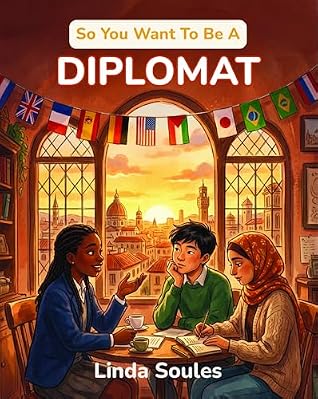
So You Want to Be a Diplomat by Linda Soules
Rating: ⭐⭐⭐⭐⭐
So You Want to Be a Diplomat by Linda Soules is a children’s educational book that lays out in simple terms what it takes to actually become a diplomat. This is an engaging book that introduces young readers to diplomacy, not as a glamorous profession, but Soules takes readers behind the scenes to show how much patience, responsibility, communication, and relationship-building go into the job.
“A thoughtful introduction that transforms diplomacy from an abstract idea into a career young readers can truly understand and imagine themselves pursuing.”
I enjoyed how thoroughly Soules explained what a diplomat is and what they actually do. Readers learn about working in embassies, communicating with foreign governments, protecting their citizens abroad, attending meetings and receptions, negotiating agreements, and developing relationships that can take years to yield results. I also appreciated how the author breaks down the tools of the trade that make for a successful diplomat, such as learning to speak other countries’ languages. Soules also balances out the important parts of the job with the perks of being in the profession, such as getting to live in places that some people only get to visit. The best part is being a part of history even if you don’t realize when it’s happening. Can you imagine being in the very room where an agreement or deal was reached? I think young readers will appreciate all of these things that Soules includes inside this useful book.
Soules does not sugarcoat the realities of being a diplomat, and in my opinion, this is the best way for young readers to fully understand what to expect before making a decision to become a diplomat. Soules writes in a way that is not overwhelming or discouraging, but by the time readers have completed this book, they will understand every part of the job, from the reality of having to move every few years, to a possible war happening even when diplomats work their hardest, or negotiations falling through after a few years. But readers will also fully understand how they can make a difference if they choose a career in diplomacy. This book has many strengths, but one that I feel will be most effective is the “A Day in the Life” section. It helps readers to go through the routine of a diplomat from sunup to sundown. I was able to imagine myself as a diplomat reading an overnight cable traffic right before breakfast, then briefing the ambassador, meeting at the host-country’s foreign ministry by 9 a.m., speaking to a journalist by lunchtime, making a consular visit, then drafting a cable by 4 p.m., then going to a national day reception in another country’s embassy by early evening, and finally home by late evening. It really helps readers to put everything in perspective.
The illustrations were colorful and bold, giving life to what Soules describes about a diplomat’s daily life page after page. The historical examples also added an interesting layer to this book. Readers are introduced to famous diplomats in history like Ralph Bunche and Kofi Annan and learn how diplomacy has played a role in major moments of world history. The fun facts keep the subject from becoming too heavy or academic but still do a great job of making readers more knowledgeable about a career in diplomacy. Soules doesn’t just end with telling children what diplomats do; she provides practical steps they can take now if this is a career that interests them, such as learning other languages, talking to people in different communities, following international news, participating in a Model UN club, or studying history. This turns the book from a career overview into something curious readers can actually use.
“More than a career guide, this book inspires curiosity, global awareness, and the confidence to believe that one thoughtful conversation can help change the world.”
Overall, So You Want to Be a Diplomat is very thoughtful and comprehensive. It doesn’t simply tell children that diplomats represent their countries. It breaks down in detail what the work entails, the sacrifices people in this career make, the skills required, the different people diplomats meet, and the purpose of diplomacy. Beyond that, it also encourages readers to think about if their personalities would fit this kind of career. This book is definitely worth reading and could be very useful for young readers who enjoy learning about other cultures, world affairs, solving problems, or who want a career that will allow them to make a difference beyond their own communities.

