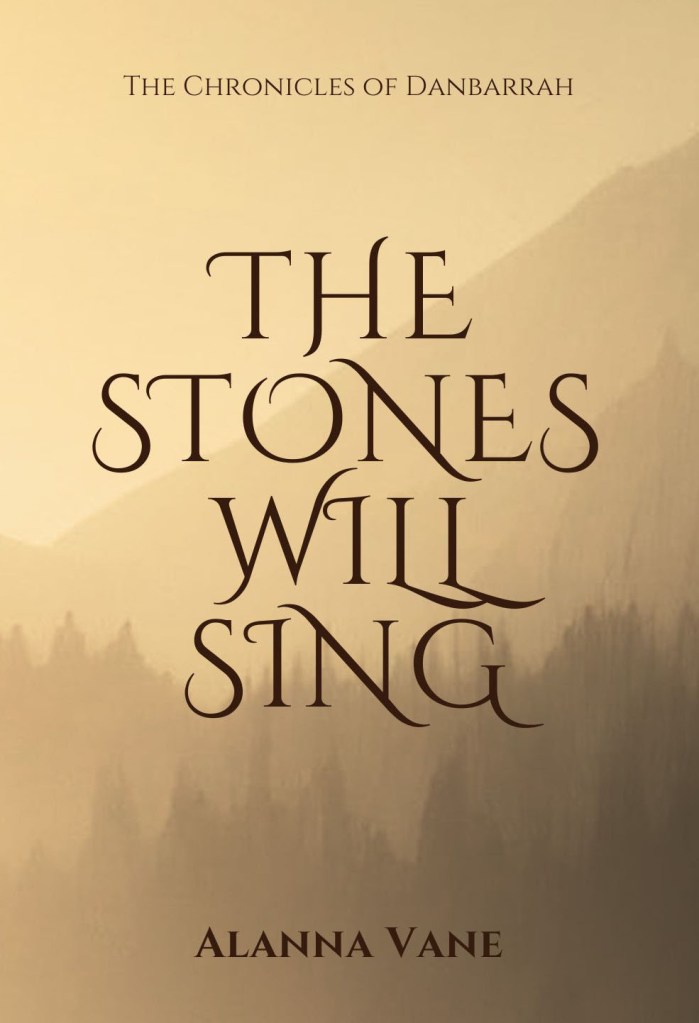
A Lyrical Tale of Resistance, Identity, and the Power of Art
⭐️⭐️⭐️⭐️⭐️
The Stones Will Sing by Alanna Vane is a quiet, powerful story about holding onto beauty in a world that’s trying to erase it. With its careful writing, steady pace, and emotional depth, this book doesn’t shout to get your attention—it gently pulls you in, and stays with you long after the last page.
It begins with a list of brutal laws: books banned, music outlawed, singing punished by the removal of your voice, dancing by the loss of your legs. These rules come from a neighboring king, and they’re enforced by threats and violence. It’s a chilling opening, one that sets the tone for the entire book—a place where expression is dangerous, but silence is just as deadly.
Cedar, a quiet girl raised in the north, finds a mysterious blue stone while exploring the islands near her home. It’s the stuff of legend—something many have searched for, but never found. She’s spent years mapping the land and keeping her love of sound and rhythm hidden from those who would punish her for it. Music isn’t something she plays, but something she hears in nature—in birdsong, in water, in movement. “The sounds and vibrations Cedar hears on the water are the closest she comes to music. It creates a glow inside her, even if she has to keep it there.” That quiet glow becomes the emotional center of the book.
Meanwhile, Prince Ash returns from exile after being kidnapped and tortured. He’s angry, confused, and stuck between wanting to help and not knowing how. He’s the second son, not expected to lead, and that makes it easy for others to ignore him—but not easy for him to ignore what’s happening. He’s lost someone close to him, and it shows in everything he does. His voice is honest, sometimes sarcastic, often thoughtful. When he says, “To lie is to underestimate another’s intelligence,” it feels less like clever wordplay and more like a peek into someone who’s tired of being handled.
The story moves slowly, but on purpose. It takes time to build its world—one full of hidden tensions, quiet bravery, and choices that matter. A lot happens between the lines: in the way people talk around the truth, in the small ways they resist, and in what they’re willing to risk for the chance to be free. Some readers may wish for faster action, but others will appreciate the room this story gives you to breathe and think.
What makes this book stand out is the way it blends everyday life with something that feels bigger—something almost sacred. The idea that music can wake up the world, that stories still have power, that silence can’t last forever—it’s all here, but never pushed too hard. Queen Azalea’s words to her husband stay with you: “We cannot ask our people to make a sacrifice we are not willing to make ourselves.” It’s one of many moments that speak to courage, not just in grand gestures, but in quiet choices.
Cedar is easy to care about. She’s thoughtful, observant, and stronger than she realizes. She’s not loud or flashy, but her way of seeing the world—through maps, sound, and small moments—feels honest and real. Ash is just as compelling in a different way. He’s grieving, frustrated, and trying to make sense of a family and a kingdom that feel broken. His relationship with his brother James (once known as Coal) adds another layer of tension, especially as James starts to bend under pressure from the same king who ordered their mother’s death.
Other characters bring weight to the story too. Samuel, the local enforcer, is especially unsettling. His polite tone and fake charm hide something much darker. Meanwhile, Grandma—stern, stubborn, and set in her ways—carries her own quiet grief, and her love for Cedar comes through even when they don’t agree. Their conversations are some of the most emotionally charged in the book. When Cedar says, “I want to go,” and Grandma replies, “How could you want to leave the safe home your parents sacrificed their lives to bring you to?”—it’s a clash that speaks volumes about guilt, love, and the pressure to stay small to keep others comfortable.
This book will mean the most to readers who enjoy slower stories with deep emotional undercurrents—fans of books like The Giver, The Book Thief, or Station Eleven. It’s for those who care about language, atmosphere, and characters who feel real. Readers who need constant action may find it a bit quiet at times, but for anyone who connects with stories about holding on to hope and voice when everything else is being stripped away, this book will hit home.
The Stones Will Sing is beautiful and thoughtful—a story about choosing truth over safety, finding your voice when you’ve been told to stay silent, and remembering that even when the world feels numb, the music is still there, waiting to be heard.

