A Stunning, Heartfelt Fantasy Quest About Loss, Courage, and Becoming More Than You Were Made To Be
⭐️⭐️⭐️⭐️⭐️
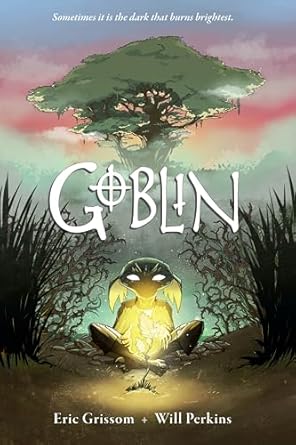
Goblin by Eric Grissom and Will Perkins is a beautifully illustrated and emotionally grounded graphic novel that does what the best fantasy stories do—it gives you a world full of magic and monsters, then quietly turns the mirror back on you. On the surface, it’s a classic hero’s journey. But at its core, it’s a deeply personal coming-of-age tale about grief, identity, and what it means to choose your own path when the world tells you who you’re supposed to be.
The story centers on Rikt, a young goblin who lives in a peaceful underground village with his family, tinkering with tools and dreaming small. That peace is shattered when a brutal warrior named Hargan invades their home in search of ancient relics, killing Rikt’s parents in the process. The book doesn’t shy away from the emotional weight of that moment—it lingers in Rikt’s eyes, in the silence that follows, and in the vow that drives him forward: to find and destroy the man who took everything from him.
As Rikt sets off into the unknown, the book opens up into a rich, dangerous world full of surprising allies, terrifying creatures, and moral tests. From a cursed talking skeleton named Stryke, to the reclusive wizard Quaf, to a haunting encounter with the undead, each chapter expands both the world and Rikt’s understanding of himself. “I don’t want to hurt anyone,” Rikt says early in his journey. “I just want to stop the one who did.” That line captures the tone of the entire book—haunted, determined, but still holding on to something soft at the center.
The quest leads to the First Tree, a place of ancient power, and a key turning point in the story. Without spoiling what Rikt discovers there, it’s enough to say that Goblin treats power not as something to seize, but as something to question. The book resists the easy path of revenge and instead asks deeper questions: What does justice look like? Can you still grow if the world has marked you for destruction?
Will Perkins’ art is a perfect match for the story. His linework is detailed yet fluid, with expressive character designs and dynamic panel layouts. The visual storytelling is cinematic, switching effortlessly between sweeping landscapes and tight, emotional close-ups. There’s a softness to the colors and character expressions that adds emotional warmth, even in the darkest moments. When Rikt stumbles through a blizzard, or trembles in a cave while ghosts whisper around him, the artwork carries the weight of the moment as much as the words do.
The tone of Goblin is thoughtful and mature, but still accessible to younger readers. It never talks down to its audience. Instead, it invites them to sit with complex emotions—grief, anger, fear, hope—and work through them alongside Rikt. While it contains action and some darker moments, the violence is handled with care, always in service of character growth rather than spectacle.
Some fantasy stories get lost in world-building, but Goblin keeps the focus tight. Its world is imaginative, but it’s Rikt’s emotional journey that drives everything. And while the ending offers resolution, it also leaves the door open for more—fitting for a hero who is still discovering who he is.
This book is a strong fit for readers ages 10 and up who enjoy graphic novels that balance adventure with emotional depth. Fans of Amulet by Kazu Kibuishi, Bone by Jeff Smith, or Hilda by Luke Pearson will feel right at home, but Goblin offers its own unique voice—one that’s quieter, more reflective, and surprisingly powerful.
Goblin isn’t just about defeating monsters—it’s about confronting the ones we carry with us, and choosing to be more than what the world expects. With its stunning visuals and honest storytelling, it’s a graphic novel that lingers even after you close the book.

