Rating: ⭐️⭐️⭐️⭐️
A Darkly Witty and Ethically Charged Look at Progress in the Tasmanian Wilds
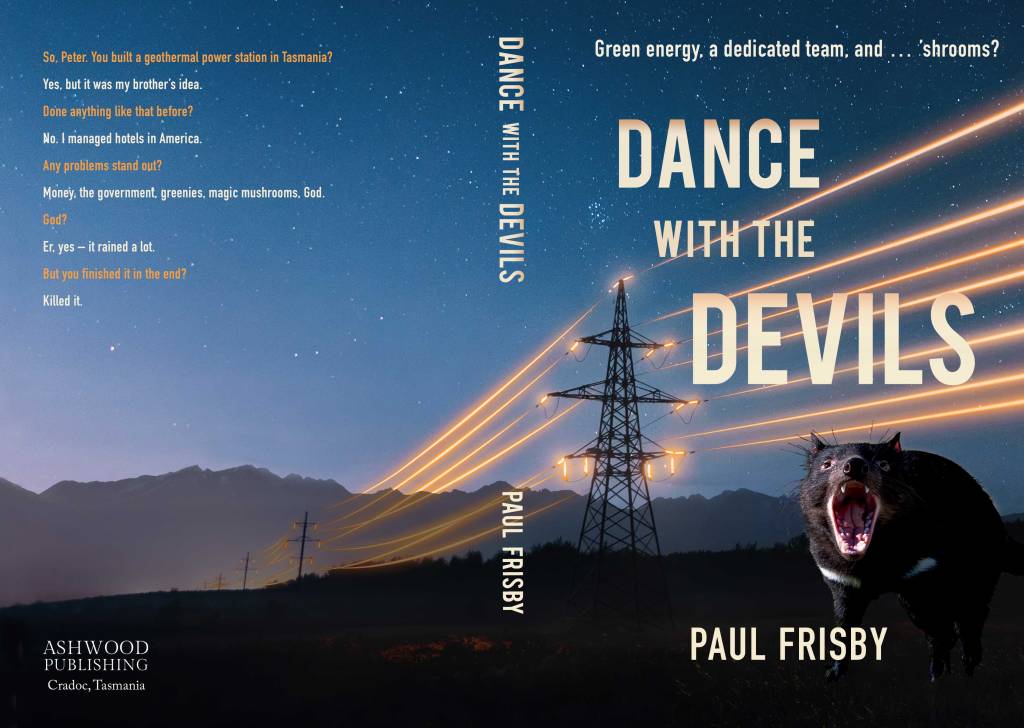
Paul Frisby’s Dance with the Devils is a sharp, satirical novel that explores the volatile mix of industry, community, and ethics in a remote Tasmanian town teetering between promise and peril. When Peter Main steps in to complete his late brother’s geothermal project—Hot Rocks—he anticipates a smooth continuation. Instead, he’s dropped into a swirling mess of protest movements, spiritual fanaticism, environmental tension, and a murder that turns everything on its head. The story unfolds with wit and bite, revealing how murky the waters of progress can be, especially when the devils—literal and metaphorical—begin to dance.
Frisby’s prose is rich with dark humor and layered dialogue, a perfect match for the novel’s themes of ambition, corruption, and moral ambiguity. The isolated Tasmanian bush is not just a setting but a character of its own—untamed, unpredictable, and quietly judging the human drama unfolding in its midst. The cast is large and intentionally messy, from Peter’s grieving but determined efforts to complete his brother’s vision, to characters like the manipulative herbalist Claude and activist Anya, who blends protest with paganism in unsettling ways. The tension rises slowly but steadily, as the line between idealism and extremism blurs. “Hot Rocks had started as an idea. Now it was a battleground,” Peter reflects midway through the novel, summing up the simmering conflict.
Plot-wise, the novel resists conventional pacing. It leans more into observation than propulsion, and at times, the number of perspectives can feel a bit overwhelming. However, this structure allows the reader to sink into the ethical gray areas the novel wants to explore. The death at the center of the plot is less a whodunit and more a spark that exposes the worst (and sometimes best) in people. Frisby is less interested in solving crimes than in examining the ripple effects of power, ideology, and grief.
What keeps the narrative grounded is Peter, whose personal loss and quiet perseverance offer an emotional throughline amid the chaos. Though some supporting characters verge on caricature, they serve the book’s larger satirical tone. Dialogue is especially strong throughout—snappy, cynical, and often laced with dry irony. Frisby’s use of the titular “devils,” both as a real presence (the native Tasmanian creatures) and a symbolic one, adds thematic weight without feeling forced.
This book is likely to appeal to readers who enjoy intellectually charged fiction with ethical dilemmas, dark comedy, and political undercurrents. Fans of writers like Richard Flanagan, Peter Carey, or even Tim Winton may find familiar rhythms here, particularly in the novel’s engagement with land, industry, and identity.
Dance with the Devils doesn’t offer easy answers—but it does ask necessary questions. What does progress cost? Who decides the value of a life, a belief, or a patch of wilderness? And when things go wrong, who do we blame? This is a thoughtful, sharp-edged novel that will leave readers thinking long after the final page.
Discover more from A Look Inside X LitVerse
Subscribe to get the latest posts sent to your email.

