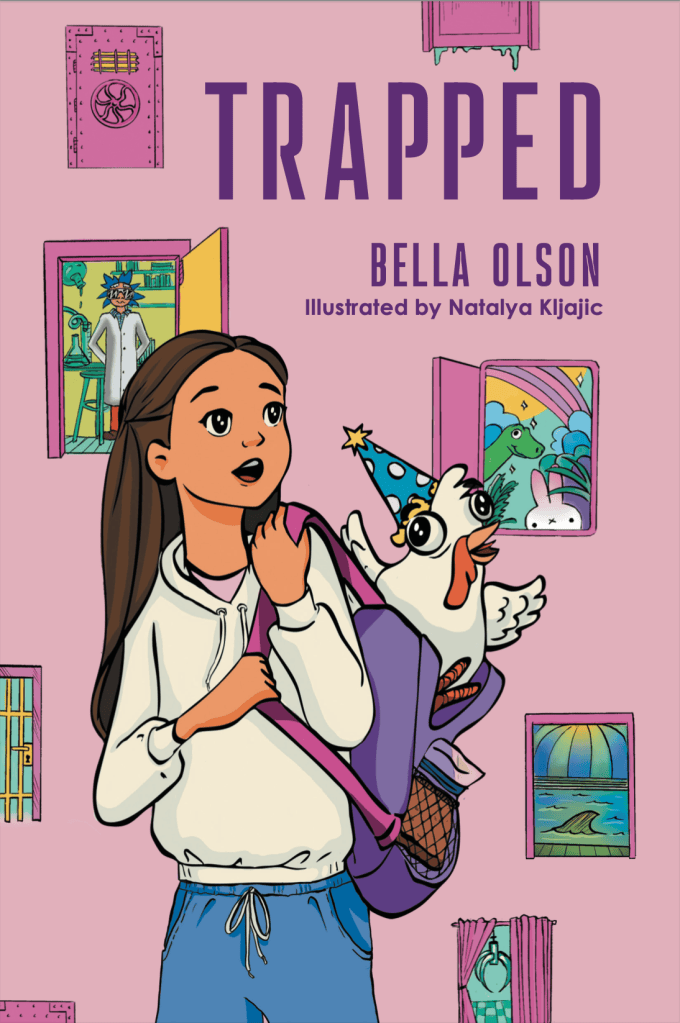
Trapped by Bella Olson is an imaginative and fast-paced middle-grade mystery that follows eleven-year-old Ava, a curious and inventive girl whose ordinary walk home from school takes an unexpected turn. After getting lost and losing her map in a gust of wind, Ava stumbles upon a massive, windowless steel facility that eerily resembles the setting of a frightening story her best friend once told her about an evil scientist named Dr. Heynis. Driven by curiosity, Ava ventures inside and quickly discovers that the legend may be more than just a tale. Captured and imprisoned within the facility, she encounters two girls who match the exact descriptions from the story, confirming that something deeply unsettling is happening inside the lab’s walls. As Ava navigates cages, trick keys, riddles, hidden clues, and a maze of increasingly dangerous traps, she must rely on her inventions, quick thinking, and inner resolve. What unfolds is a high-stakes adventure, but will Ava’s determination and inventive spirit be enough to escape a place designed to contain more than just bodies?
Bella Olson writes with a lively, kid-centered voice that balances humor and suspense with impressive control. The story’s premise—an “evil scientist” who traps children—could easily veer into territory that feels too dark for middle-grade readers, but Olson maintains an accessible tone through clever dialogue, playful absurdity, and imaginative trap mechanics. The plot builds organically: a playground-style legend evolves into a tangible threat, and planted clues really seem to pay off. One especially striking moment occurs when Ava realizes that the shadowy figures in the cage match her friend’s earlier description exactly—a sharp narrative payoff that transforms rumor into reality and makes the stakes even more real. Another standout sequence is the shrinking maze room with its glowing countdown clock, which heightens tension while directly confronting Ava’s claustrophobia, forcing her to act despite fear. These scenes not only reinforce the premise but also deepen the emotional experience of the adventure.
The pacing is brisk and energetic, keeping young readers engaged as each challenge escalates logically from the last. Olson does a great job adding in clues as repeatedly scribbled hints that later unlock a riddle- and this really strengthens the detective elements of the story. While transitions between some high-intensity moments move quickly, slightly shortening room for emotional reflection, the consistent cause-and-effect structure and inventive plotting still help to maintain narrative momentum. Ava’s character development feels authentic: she begins as curious and inventive, known for creating gadgets to navigate her prank-filled home life, but over the course of the story, she grows into someone who has to consider if she wants to be loyal or to self-preserve. Her refusal to abandon the other girls, even when escape might seem possible alone, adds emotional weight and reinforces the story’s core themes of friendship and bravery. Maya and Luna gradually gain dimension as the story moves forward. They showcase vulnerability, but they are not passive victims. I love how they collaborate and solve problems, because this reinforces the idea that teamwork takes group effort. Dr. Heynis and his fellow scientists are created as these exaggerated, menacing characters, and it fits very well into the middle-grade tone of the narrative. Ophelia and Rocco add subtle but important layers to the narrative and to Ava’s world. Their presence reinforces Ava’s relational life outside of the lab. They add contrast to the normal side of Ava’s world. But Rocco was probably one of my favorites because it’s a magical chicken who adds levity to otherwise tense moments in the narrative.
The black-and-white illustrations by Natalya Kljajic enhance the reading experience, adding visual texture without overwhelming the suspense. The illustrations also help enhance the imaginative elements—such as elaborate traps and exaggerated science contraptions, making them feel vivid and, in my opinion, they give it a comic-book feel.
Readers who enjoy puzzle-driven, high-stakes adventures like Escape from Mr. Lemoncello’s Library by Chris Grabenstein will likely be drawn to Trapped. Like that title, Olson’s novel blends riddles, problem-solving, teamwork, and escalating tension into a cohesive mystery that invites readers to think alongside Ava. With its creative trap sequences, planted clues, steady character growth, and heartfelt emphasis on loyalty, Trapped stands as a strong entry in the children’s mystery-adventure genre.

