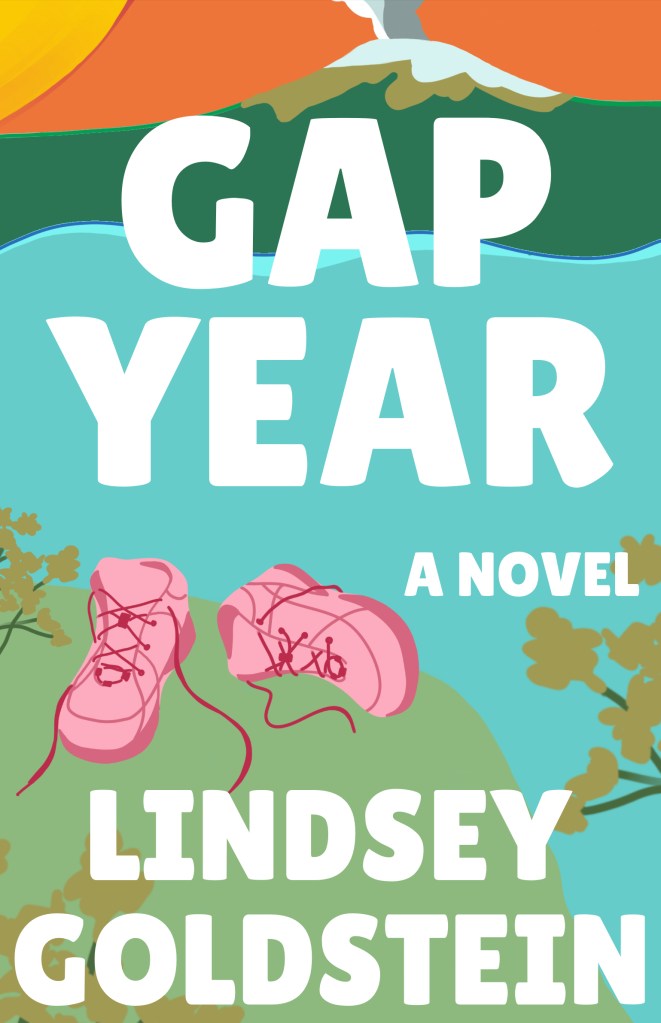
Gap Year by Lindsey Goldstein opens with Jane climbing Cotopaxi in Ecuador, completely out of breath, exhausted, and pushing herself up a frozen mountain. From the first scene, you can tell this climb isn’t just about the mountain — it’s about everything she’s carrying emotionally. And when the story shifts back to what led her there, it hits hard.
Within the span of a single day, Jane drops her only child, Liza, off at the airport for a year abroad in Spain… and then her husband of more than twenty years tells her he’s fallen in love with someone else. The timing is brutal. The emotional whiplash is real. And Lindsey Goldstein doesn’t rush that moment — she lets it land. Jane isn’t dramatic. She’s stunned. Disoriented. Angry. And heartbroken.
What I really appreciated is that Jane doesn’t immediately fall apart in a way that feels over-the-top. Instead, something shifts. She resigns from her stable CPA job and declares she’s taking a “gap year” — a year not for her daughter, not for her husband, not for anyone else — but for herself. She decides she’s finally going to climb Cotopaxi and travel the way she once dreamed about. It’s not impulsive; it’s a breaking point that has been building quietly for years.
Goldstein writes in a very intimate, first-person voice, so we live inside Jane’s thoughts — the self-doubt, the regret, the flashes of humor, the anger. One scene that really stood out to me is the parking garage moment after Liza goes through security. Clark delivers his confession there, and the way Jane processes it — noticing small details, feeling physically ill, trying to understand what just happened — feels painfully real. Another strong scene is when Jane resigns from her job. That moment carries so much underneath it — her history with Alan, the safety of routine, and the fear of stepping into something unknown. It’s not loud. It’s layered.
What makes this story work is that no one is written as a cartoon villain. Clark isn’t painted as evil — he’s flawed, emotionally disconnected, and dissatisfied long before his confession. Jane admits she poured everything into motherhood and let her marriage become transactional. Liza, even though she’s overseas for much of the story, remains emotionally present — and her encouragement for her mom to “spread your wings” becomes unexpectedly meaningful. Even Alan, Jane’s boss, is more complex than he first appears. Each person in Jane’s life reflects a different version of who she has been.
The Ecuador chapters are especially powerful. The turbulence on the plane into Quito, Jane’s panic, and later the physical struggle with altitude on Cotopaxi all mirror what’s happening inside her. The climb scenes are not romanticized — they’re hard. Her lungs burn. Her body strains. She questions herself. And that’s what makes them matter. The mountain isn’t about proving something to other people — it’s about proving something to herself.
At its core, Gap Year is about identity — who you are when the roles you’ve lived in for decades fall away. Wife. Mother. Employee. Provider. When those labels shift or disappear, what’s left? Goldstein doesn’t offer tidy answers. Jane’s growth is messy and sometimes contradictory, which makes it feel honest.
If you enjoyed books like Wild by Cheryl Strayed or Eat Pray Love by Elizabeth Gilbert, you’ll probably connect with this story — but this one feels more grounded in suburban domestic life and midlife reinvention. It’s less about spiritual enlightenment and more about emotional reckoning.

