Rating: ⭐️⭐️⭐️⭐️⭐️
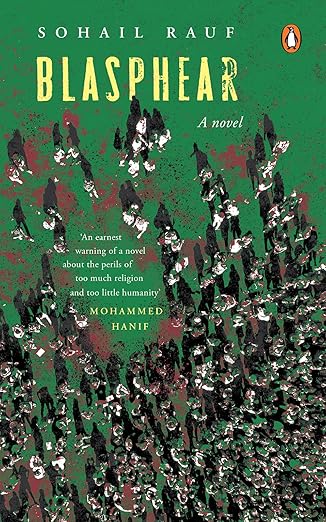
There are novels that feel urgent from the very first chapter, and Blasphear is one of them — not because it moves briskly, but because you can feel something heavy sitting beneath every page.
The story begins with the death of seventeen-year-old Hasan, found hanging from a ceiling fan in his home in Shanti Nagar. What appears to be a straightforward suicide case quickly grows complicated. Sub-inspector Waqas Mahmood is assigned to investigate, but the town is already simmering from recent blasphemy riots, and religious parties have tightened their grip on public life. Rumors spread. Loyalties harden. And even basic questions — suicide or murder, autopsy or not — carry political weight.
The novel moves between Waqas’s present-day investigation and Furqan’s memories of growing up with Hasan. Through Furqan, we meet Hasan not as a case file, but as a friend — a thoughtful boy navigating faith, identity, and belonging. We see the warmth of shared school days and the early conversations between Hasan, Furqan, and the Hindu brothers Ram and Mohan. Those scenes feel intimate and layered, grounded in books, debate, and curiosity. That sense of openness makes the later violence and suspicion all the more painful.
As tensions rise in the town, the lynching of Mohan marks a turning point. The dread builds slowly — slogans growing louder, crowds gathering, fear spreading through neighborhoods. The aftermath is equally unsettling. Members of the Deen party, including Hasan, are arrested and then released within days. Promises of justice circulate, but they feel fragile. Through these events, Rauf never sensationalizes. Instead, he allows restraint and atmosphere to do the work.
Hasan’s transformation is one of the novel’s most tragic threads. After his release from jail, Furqan describes him withdrawing into himself, avoiding conversations about Mohan, and later mentioning that he had begun reading about the Blasphemy Law — as if he had opened a window but wasn’t sure how to step through it. That detail lingers. It shows a young man in conflict, not a caricature. His internal struggle mirrors the broader ideological tightening happening around him.
Waqas’s chapters carry a different kind of tension. His visit to the Deen-e-Kamil office and his conversations with Maulana Saleem are controlled and layered. Words are chosen carefully. Silence speaks volumes. Even the question of whether to conduct an autopsy becomes charged. Waqas is not written as a fearless crusader; he feels human — cautious, observant, aware of the forces pressing against him.
Rauf’s prose is measured and steady. The pacing reflects the slow tightening of social pressure in the town rather than relying on dramatic twists. The novel doesn’t hand readers easy villains or easy answers. Instead, it shows how ordinary people — students, families, officers — become entangled in systems driven by ideology, fear, and power.
By the end, Blasphear feels less like a conventional mystery and more like a study of how communities fracture — how accusation becomes influence, how faith can be politicized, and how truth becomes dangerous in volatile climates. The conclusion resists tidy resolution, reinforcing the novel’s moral tension. Readers who were moved by the politically layered storytelling of A Burning by Megha Majumdar will likely find Blasphear equally compelling in its portrayal of how personal tragedy collides with public ideology.
Blasphear is thoughtful, unsettling, and deeply human — it refuses to simplify what is complex, and it trusts readers to sit with that complexity.

